
Oura turned a sleep tracker into a ring Gucci wanted to dress. Now it is asking women to trust it with their cycles, their menopause symptoms, and their medical records.
Coin tosses decided who could walk out of a Soho jewelry store with a free smart ring this summer. Oura teamed up with New York retailer Moses the Jeweler for a one-day “Oura Pawn Shop” and gave the first 250 people a free Oura Ring 5 if their coin landed logo side up. The stunt launched the biggest campaign in the company’s history, designed to mark its smallest ring, and its creative brief was blunt. Laura Petruccelli, co-founder and chief creative officer of the agency nice&frank, was quoted in Marketing Daily saying that when she asks people why they don’t own an Oura Ring, the answer is almost always “It’s too chunky.”
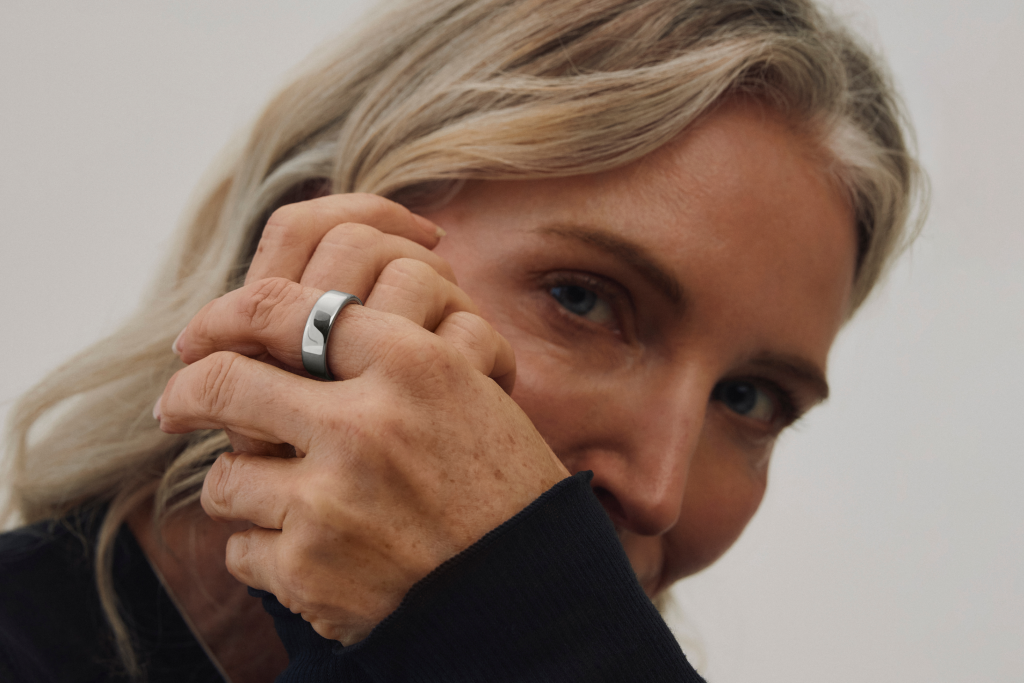
That complaint has trailed a device that tracks heart rate, skin temperature, sleep, and menstrual cycle patterns for most of the past decade. Over the years, the rings have grown slimmer, with finishes and proportions taken from jewelry design. The ring’s appeal now extends well beyond its appearance, with increasingly sophisticated health features and a subscription that adds to the cost of ownership.
From Oulu to the Ring Finger
Petteri Lahtela, Kari Kivelä and Markku Koskela founded the company in Oulu, in northern Finland, in 2013, drawing on experience at local tech firms including Polar and Nokia. Their early pitch borrowed from the phone in your pocket. Lahtela asked audiences whether they knew the “charge level of your body,” and the first ring reached early adopters through a Kickstarter campaign in August 2015.
Miklu Silvanto, Oura’s chief design officer, now decides what the ring looks like. In a post on Oura’s blog, he described the company as sitting at the intersection of jewelry design, fashion, and industrial design. He recalled that the first-generation ring, also ceramic, was “built like a tank.” Silvanto explained that titanium rings get their color from a PVD coating that can fade, which led the team to choose ceramic for the Ring 4 Ceramic. Silvanto also predicted that members will eventually own one Oura for the gym and a more elegant one for a dinner party.
Gucci gave the ring its first luxury outing in 2022 with a $950 edition in black PVD-coated titanium, carrying the house logo and a braided torchon in 18-karat gold and sold with a lifetime subscription. “Oura has always held a firm belief that wearables can be both innovative and stylish,” Michael Chapp, Oura’s chief operations officer, said at the launch. Business of Fashion has listed Kim Kardashian, Gwyneth Paltrow and Prince Harry among its wearers.
By June 2026, the company had sold 3.1 million rings in nine months, up from 1.8 million a year earlier, figures disclosed in its SEC registration statement. It counted 5 million paid members, about 72% of them women and 27% aged 46 or older. The listing aimed to raise up to $2.2 billion on the Nasdaq and was postponed on September 29. Oura CEO Tom Hale said the company has “the luxury of choosing our moment,” Axios reported.
What the Ring Reads, and What It Costs
Inside the band, LEDs shine light into the finger, and photodetectors measure changes in the reflected light as blood pulses through the tissue. A separate sensor logs nighttime skin temperature in changes as small as 0.1°C. The app reports that temperature against your own baseline, so a warm night shows up as +0.1 above your normal, a quiet tell after a long-haul flight or at the start of a cold.
Health Radar, which launched alongside the Ring 5, brings cardiovascular and respiratory signals together on one dashboard. Its Blood Pressure Signals feature analyzes 30 days of nighttime pulse data for patterns that may be associated with elevated blood pressure. Oura’s support page states that the feature displays no blood pressure values, cannot diagnose or rule out any condition, and should be confirmed with a cuff. A companion feature, Nighttime Breathing, shows how often breathing disruptions occur during sleep over the same 30-day window.
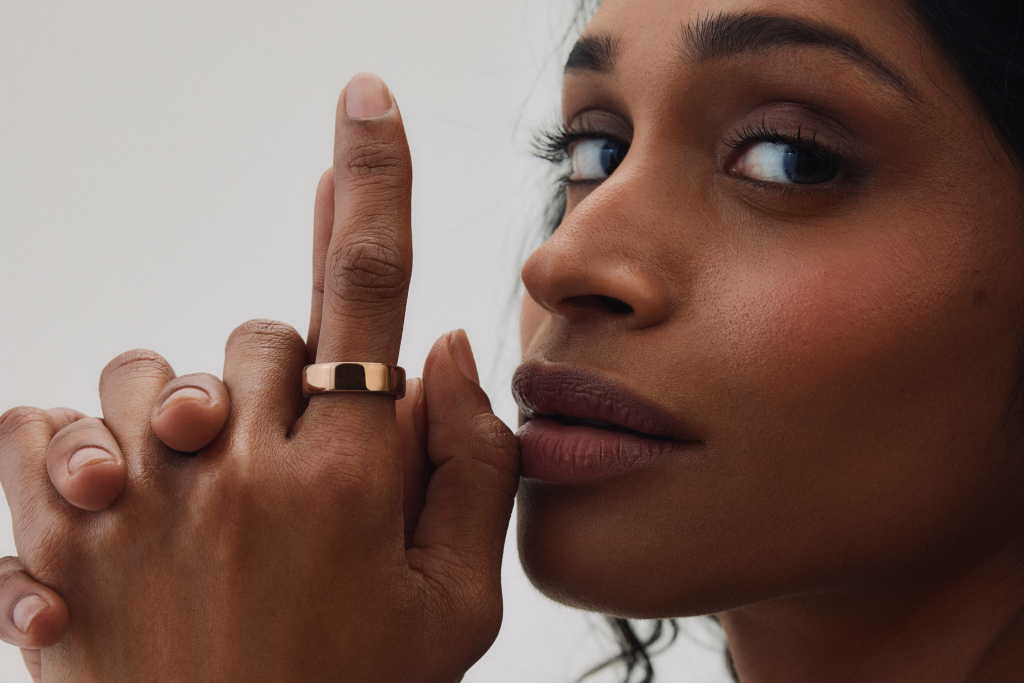
For runners and walkers, Oura Labs, the app’s early-access section, now estimates VO2 max automatically from qualifying GPS-enabled workouts. It sits next to a new Cardio Effort score that measures a week’s activity against your personal baseline. The Ring 5 comes in sizes 6 to 13, with Black and Silver at $399 and Gold, Deep Rose, Brushed Silver, and Stealth at $499. Without a membership, the app shows only the Readiness, Sleep, and Activity scores.
The full data costs $5.99 a month or $69.99 a year. On the annual plan, the ring plus two years of paid membership comes to about $539 for Black or Silver and $639 for the other finishes, before tax. New members receive a free first month. Counsel Health’s on-demand physician service costs extra. Battery life runs six to nine days, enough to leave the charger at home for most week-long trips. Oura’s filing also notes that certain batches of the Ring 4 developed battery problems, and the company replaced those rings free of charge.
The Women’s Health Bet and Its Blind Spots
Oura has been building for its female members since 2022, when users of Natural Cycles, the first FDA-cleared birth control app, began syncing overnight temperature trends from the ring in place of a morning thermometer reading. Pregnancy Insights and a Perimenopause Check-In followed, letting members share data with partners Midi Health, Evernow, Maven Clinic, and Progyny. In May, the company added hormonal birth control support covering more than 20 method combinations. It also launched Menopause Insights, built on an Oura-developed questionnaire that scores menopause’s impact across symptoms.
Chris Curry, an OB/GYN and Oura’s clinical director of women’s health, said women are too often “left to piece together symptoms from search results, social media, and brief check-ins.”
Sleep staging, the feature that built the brand, is now the subject of a proposed class action from California buyer Madison Surber. The suit challenges Oura’s “95% Sleep Staging Accuracy” marketing. It leans on a 2025 Scientific Reports study of patients in a clinical sleep laboratory. In that study, the ring distinguished sleep from wake about 85% of the time, and its agreement with lab scoring across wake, light, deep, and REM sleep was 53.18%. Raphael Vallat, Oura’s lead algorithm scientist for sleep tracking, responded in a company post titled Sleep Staging Is Not Guesswork. He argued that the researchers used just two ring sizes across all participants and an algorithm Oura has since replaced, and that random guessing among four stages would score 25%.
Oura’s description of the US Department of Defense as its largest enterprise customer, along with its commercial relationship with Palantir, sparked a wave of posts in 2025 from users giving up their rings, some citing menstrual data. Hale told Fortune’s Brainstorm Tech audience that neither the government nor Palantir can see member data, adding, “We will never sell your data to anyone, ever.”
Health data that a consumer device company collects directly generally sits outside HIPAA, although other privacy laws may apply, so members rely partly on Oura’s privacy policy. That policy now covers a broader scope, since eligible US members can import diagnosed conditions, medications, lab results, and allergies into the app, as explained in Oura’s electronic health records guidance.
