On Mount Mulanje, women have long conquered the trails. Breaking into the male-dominated world of professional mountain guiding is another challenge.
Read enough Tripadvisor reviews of Mount Mulanje, and a pattern emerges in who thanks whom. Women who hiked the mountain alone write in to praise the men who led them up Sapitwa, Malawi’s highest peak. One reviewer this August wrote that, as a solo female hiker, she felt completely safe with her guide, Aubrey, and with the porter and chef he hired. Page after page, the guides thanked are Davie, Jamson, Patrick, Kindness, and Hassan, all men, while women appear almost entirely as clients.
UNESCO’s July 2025 decision to inscribe the Mount Mulanje Cultural Landscape, after 25 years on its tentative list, puts that imbalance before a much larger audience. The listing recognized a range held sacred by the Yao, Mang’anja and Lhomwe peoples, with burial grounds, ritual sites and old paths spread across a plateau of cedar forest, grassland and bare granite. The 9,849-foot massif rises out of the tea estates of southern Malawi, and its trails, huts and granite peaks now draw hikers who might once have gone straight to Kilimanjaro. Most of them will hire a local guide to lead the way.
The Mountain Club of Malawi recommends a guide for anyone’s first few trips. Its member rates are K23,000 a day for a guide and K20,000 for a porter, with tips left to the hiker. The club also publishes a list of local guides and porters for anyone planning a trip, and nearly every name on it belongs to a man.
The Race That Began With the Porters
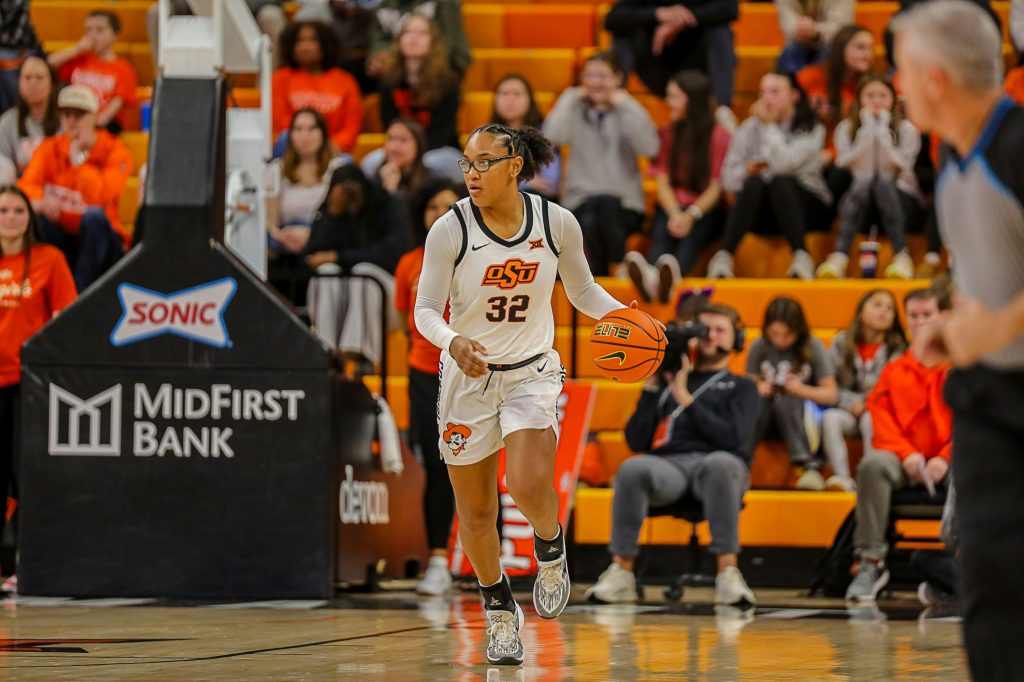
The Mount Mulanje Porters Race has been testing runners on the mountain’s steep terrain since 1996. That year, two British teachers at Mulanje Secondary School started the Porters Race to thank the porters who carried their bags. Recent editions have covered 25 kilometers across the mountain’s steep terrain. In its early years, it was open only to the mountain’s porters and guides, before local and national athletes joined in.
Doris Fisher, the most decorated runner in the women’s field, described the climb to the Mail & Guardian with a runner’s bluntness. “We crawl as we go up the mountain as you cannot run,” she said. According to the Mulanje Mountain Conservation Trust, she set the women’s record of 2:40:15 in 2022, three years after finishing South Africa’s Comrades Marathon in 7:20. She has since moved to a professional club across the border. Her longtime rival, Tereza Master, sister of elite runner Chancy Master, won in 2023 and told the Trust she was grateful for the chance to showcase her skills on a prestigious stage. That year, the organizing committee chair, Kondwani Chamwala, told allAfrica that a new name on the women’s podium signaled progress.
The field is still lopsided. The 2025 edition had 25 local women against 100 local men, even though the women’s winner takes home the same K1 million as the men’s. The women on that podium cover the mountain’s steepest ground faster than most paying hikers, while the question of women’s access to paid guiding work has received far less attention.
Three Nights on the Plateau
Some of Mulanje’s guides reached the job through the kitchen or under a load. Snowden, a guide and chef, told Far and Wild that he first went up as a cook for other guides’ clients and noticed how rarely they told stories or answered questions. “I learnt the routes and decided to study to be a good guide,” he said. Cooking, portering and walking behind someone more senior are how a young man from the villages around Likhubula becomes a guide. Each step ends with an overnight stay in a hut with strangers.
That is where the resistance gathers. In 2020, a group of tourism workers called The Walkers raised money by walking from Blantyre to Lilongwe. The funds subsequently trained 215 guides across four districts. Only 14 of them were women, according to The Nation. Team leader Yangairo Yangairo told the newspaper that “in Mulanje we found that some men discourage women from being guides.” The reason, he said, was that a trek keeps a guide away from home. He also pointed out that the same men spend those three days on the mountain with female clients.
Among the ten walkers was Kay de Silva, who founded Warm Heart Adventures in Cape Maclear after nearly 20 years in Malawian hospitality. Looking back on her career, she told WeTravel, “I didn’t always feel supported or represented as a woman.” Through her work in tourism, she sought to bring more women into the industry.
Mervis Maigwa got closer to the summit trade than most. She helped organize a 2021 hike of more than 60 people, among them senior officials and afro-jazz musicians, which was described as the largest group ever to climb Mulanje. She told Bluedot Living that, as far as she knew, she was one of only two female tour operators in Malawi, and that her mother was uneasy when she left teaching for tourism. Some clients are sexist, and some refuse to take her seriously, she said. Women-only groups seek her out because they want a woman leading. She won the Malawi Tourism Industry Award for individual destination promotion and still sums up the trade-off in her favor. “The pros outweigh the cons,” she said.
The Women Already Carrying the Mountain
When New Internationalist met 21-year-old Charity Gogoda and two friends on the lower slopes of Mount Mulanje, they were returning from a three-hour trek into the forest with 25-kilogram bundles of firewood balanced on their heads. They make the trip every three days. “It’s heavy,” Gogoda said. According to Mongabay, women have been walking increasingly long distances to collect firewood as the forest reserve thins, having lost about a fifth of its primary forest cover in two decades.
Around the mountain, programs backed by Botanic Gardens Conservation International and the Mulanje Mountain Conservation Trust have trained hundreds of local women to process wild fruit and produce briquettes, soap, and candles. The initiatives aim to reduce dependence on firewood collection by creating alternative sources of income for women living in communities around the massif.
At the first Porters Race after the UNESCO listing, Tourism Minister Vera Kamtukule, newly named Mulanje Mountain Ambassador, called porters and guides the lifeline of the attraction. She told The Nation that “Setting up a welfare fund is important.” The proposal places the welfare of Mulanje’s guides and porters on the government’s agenda.
Hikers who want a woman leading them up Sapitwa can ask whether one is available at InfoMulanje, opposite the PTC Superette at Chitakale. They book huts, guides, and porters on +265 1 466 466.