
On Jeju Island, the haenyeo still dive for a living in their seventies and eighties. Science has started to explain how their bodies manage it, and tourism is still working out what it owes them.
The detail Melissa Ilardo kept returning to, after her first trips out with Jeju’s women divers, was how quickly the oldest of them left the boat. “I saw women over 80 diving off a boat before it even stopped moving,” the University of Utah geneticist told University of Utah Health, a line that rearranges whatever you thought you knew about aging and who gets to be called an athlete.
The haenyeo, whose name translates as “sea women,” work the cold waters off South Korea’s volcanic southern island for abalone, sea urchin, conch, octopus, and seaweed, one breath at a time, in wetsuits and weight belts, with a net and an iron hook. When UNESCO added the culture of Jeju haenyeo to its Representative List of the Intangible Cultural Heritage of Humanity in 2016, its official listing described a community of women in their 80s who descend about 10 meters to gather shellfish.
These women harvest for up to seven hours a day for roughly 90 days a year, holding their breath for about a minute and surfacing with a distinctive whistle. Seven years later, the Food and Agriculture Organization (FAO) named the Jeju Haenyeo Fisheries System a Globally Important Agricultural Heritage System, a designation the FAO frames around the divers’ role in protecting marine biodiversity.
A full count by Jeju Province, reported in the Kyunghyang Shinmun, found 2,371 active divers at the end of 2025, comprising 2,350 women and 21 men, compared with 4,377 a decade earlier. Of those counted, 1,077 were in their 70s, 423 were aged 80 or older, and only 105 were under 50. The workforce stood at 14,143 in 1970, as tangerine orchards and tourism offered women on the island a living that kept them dry in January, and two UN listings have done little to change the direction of those figures.
How an 80-Year-Old Body Learns The Sea
To work out how much of a haenyeo is born and how much is made, Ilardo’s team compared the genomes of 30 divers with those of 30 Jeju women who had never dived and 31 people from the Korean mainland, publishing the results in Cell Reports in May 2025. Putting septuagenarian non-divers into the open ocean was off the table, so volunteers held their breath with their faces in a bowl of cold water, a trick that sets off the body’s dive reflex.
As Ilardo recounted to NPR, the divers found the exercise faintly ridiculous and told her, “Whatever this is, this isn’t diving.”
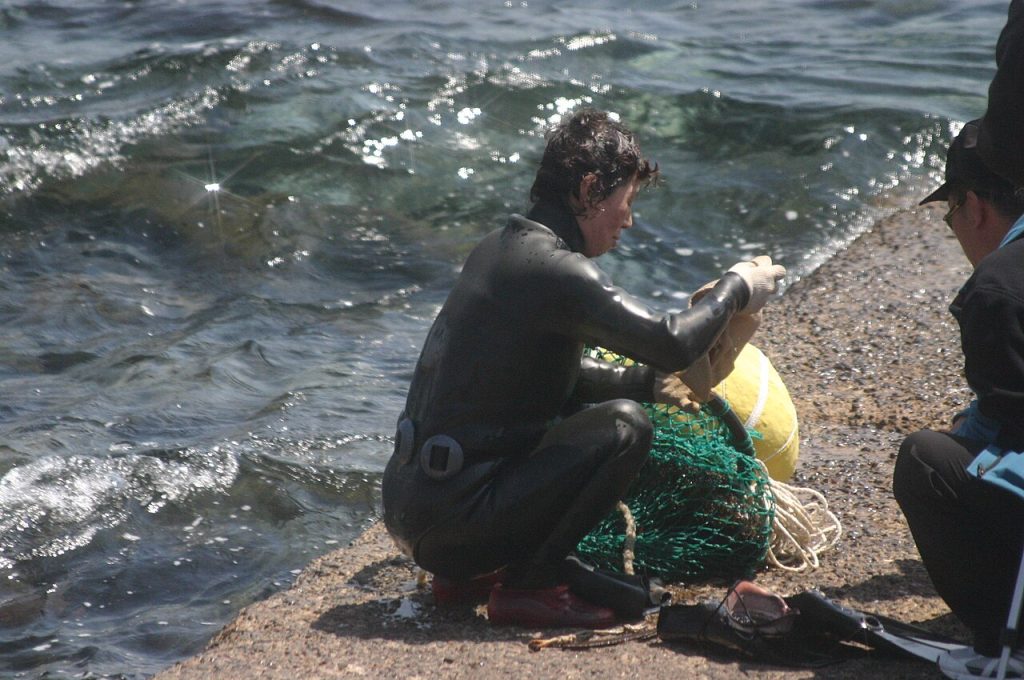
Their heart rates still fell about 50 percent further than those of their non-diving neighbors, an effect the scientists attribute to a lifetime of practice because it appeared only in the divers.
What the island passes down through blood turned out to be shared well beyond the boats, since the variants the team found, linked to lower blood pressure and cold tolerance, appeared across Jeju women generally, divers or otherwise. Ilardo told National Geographic that the blood pressure variant may have protected women who kept working through pregnancy, since pregnant haenyeo have typically dived until the day they gave birth. Jeju has shaped its women for this job for a long time, and each diver then spends fifty or sixty winters sharpening what she inherited.
Senior divers sit at the top of a three-rank system that UNESCO describes as running from the novice hagun through the junggun to the sanggun, who guide everyone below them. The Korea JoongAng Daily reported that the most experienced women work below 10 meters, staying in the water three to seven hours per session and diving as many as 300 to 400 times a day, while mid-level divers keep to 5 to 10 meters and beginners stay within 3, so a woman’s depth tells the rest of the village exactly how many years she has put in.
What Gets Passed Down, and to Whom
Forty-five trainees, aged from their 20s to their 50s, were sung into the Jeju Hansupul Haenyeo School by working divers at its induction ceremony in early May. The school opened in 2008 and had graduated 949 students, 70 of whom were working haenyeo, when the Korea JoongAng Daily reported on it in May 2026. Its four-month program covers muljil, the traditional technique of free diving, alongside CPR, seafood harvesting and the songs and customs of the diving collectives. Principal Kim Sung-geun told the JoongAng Daily that he now sees applicants “from other regions and even from overseas.”
Graduates still need a village cooperative to take them in, because, as UNESCO notes, those local fishery cooperatives hold the fishing rights. The Kyunghyang Shinmun noted that beginners earn too little from the sea to live on and often struggle to find a place in the tightly bound diving communities. In 2024, the province answered with cash, offering new divers aged 40 to 44 a settlement fund of 500,000 won ($373.10) a month for three years and raising the upper age for joining a fishing village association from 40 to 45.
Ryou-jin Ko came to the sea after earning a degree in athletics, and burnout in the city sent her home to the eastern coast, where her mother and grandmother dived, as she told the FAO. When the FAO interviewed her in 2025, Ko was 42 and among the youngest of 83 divers in her village. Ten were planning to retire that year, and she worried she might eventually find herself alone out there.
Warming water has thinned the harvest as well, and she recalled drying 30 sacks of agar seaweed three years earlier against seven that season. Her account of the sumbi, the whistle a diver releases as she breaks the surface, explains better than any policy paper why this knowledge travels through people, since you dive within sight of the others and the sound, she said, means “I’m still here.”
The 2 PM Show at Sunrise Peak
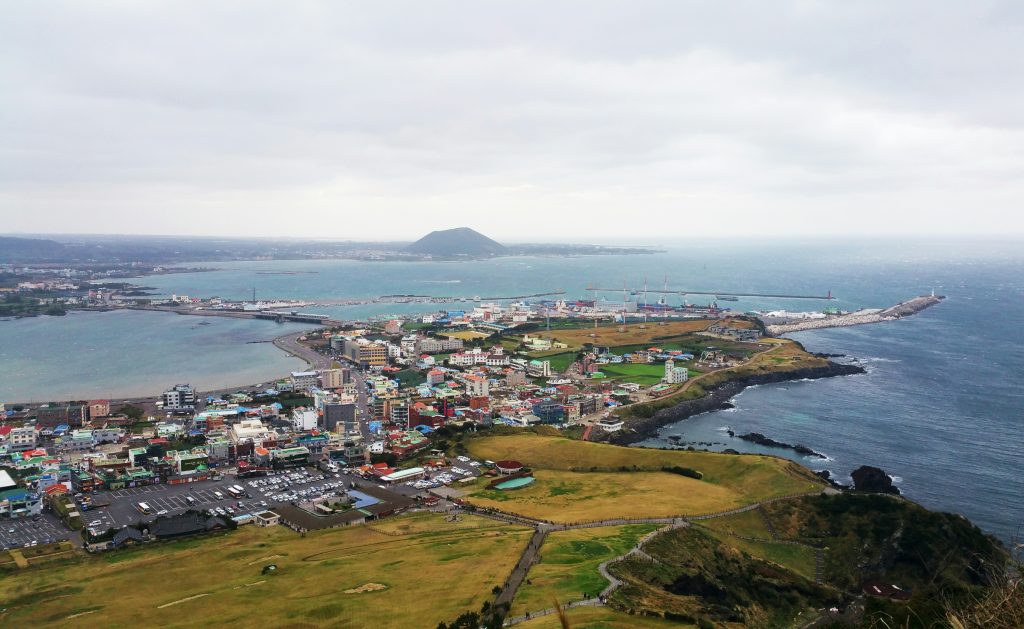
Visitors who climb Seongsan Ilchulbong, the tuff cone on Jeju’s eastern tip, usually come down in time for the haenyeo performance on the beach below, scheduled daily at 2 PM and free to watch. One tour operator’s listing describes four divers aged 70, 79, 81 and 82 who sing the Ieodo work song before heading out to bring up abalone, conch and octopus, with the show called off when the weather or the sea turns rough.
In Gimnyeong, visitors can learn to make a traditional flotation buoy with a working haenyeo. At the same time, the village cooperative in Sewha, recognized on UN Tourism’s Best Tourism Villages list, offers a Haenyeo Stay program that includes diving instruction and time with working divers. Haenyeo’s Kitchen in Jongdal pairs a meal of the day’s catch with a question-and-answer session with the divers themselves.
Gyeong-ho Ko, who directs Jeju Province’s Haenyeo Cultural Heritage Division, told the FAO that the island invested 27.3 billion won, about $20 million, in 2025 to support its divers. The funding covered medical expenses for diving injuries, financial allowances for women in their 70s and 80s, retirement benefits for those over 75, and programs to preserve their traditions.
Jeju’s fire department logged 104 haenyeo safety incidents between 2019 and 2023, with 34 in 2023 alone, double the year before; divers aged 70 or older accounted for 76 percent of the cases, with cardiac arrest the leading cause, according to the Kyunghyang Shinmun. A lunch at Haenyeo’s Kitchen or a bag of urchin bought directly from a diver on the pier supports an industry whose women have spent decades doing the hardest work, a decent argument for spending money there.
The Financial News reported that on August 29, Jeju Governor Wi Seong-gon joined retiring divers at the Seongsanpo Fisheries Cooperative in Seogwipo for the 2026 Jeju Haenyeo Honorary Retirement Ceremony, one of the regional events the province and the Haenyeo Association hold to recognize women who spent decades in the water, and the 2 PM show continues every day the sea allows.
